
Few things ruin a morning quite like walking downstairs and finding your basement floor covered in water.
Basement flooding is one of the more common forms of water damage homeowners can experience because basements sit at the lowest point of the property. When water enters the home, gravity tends to send it downward.
Heavy rain, plumbing problems, foundation leaks, sump pump failures, appliance issues, and drainage problems can all contribute to basement flooding.
For Long Island homeowners, knowing what causes basement flooding and how restoration works can make the recovery process much easier.
Heavy Rain Can Overwhelm a Basement
A strong storm can introduce large amounts of water around a home’s foundation in a short period of time.
Normally, gutters, downspouts, grading, drainage systems, and sump pumps help move water away from the home.
When those systems cannot keep up, water may begin finding another way inside.
Small foundation cracks can become entry points.
Water can also enter around basement windows or other openings.
Once water reaches the basement, it can spread across flooring and soak into walls, furniture, storage boxes, and other materials.
Sump Pump Problems Can Lead to Flooding
A sump pump is designed to collect and remove water before it floods the basement.
Unfortunately, pumps can fail.
Power outages, mechanical problems, clogged components, damaged discharge lines, or unusually heavy water flow can prevent the system from working properly.
Homeowners sometimes discover a sump pump problem only after water is already covering the basement floor.
Checking the system periodically can help identify obvious problems before a major storm.
Backup power may also be worth considering in homes where the sump pump plays a major role in preventing basement flooding.
Plumbing Leaks Can Flood a Basement
Basements often contain water heaters, utility sinks, washing machines, plumbing lines, and other equipment that can leak.
A broken pipe can release a surprising amount of water.
Water heater failures can also introduce dozens of gallons of water into the surrounding area.
If the water continues flowing because no one notices the leak, the damage can spread throughout the basement.
Shutting off the water source is important, but the remaining water still needs to be removed.
Water Can Damage More Than the Basement Floor
A flooded basement does not only affect the surface where the water is visible.
Water may soak into drywall, framing, insulation, flooring, carpet padding, and stored belongings.
Furniture legs can absorb moisture.
Cardboard boxes can collapse.
Wood materials may swell or warp.
Electrical equipment can also become damaged or unsafe.
The deeper the water becomes and the longer it remains, the more materials may be affected.
That is why basement flooding should be treated as a property damage issue rather than a simple cleaning job.
Start With Water Extraction
Once the source has been controlled and the area is safe, standing water needs to be removed.
Professional water extraction equipment can remove large volumes of water quickly.
Basements can contain an enormous amount of water even when the depth looks relatively small.
A layer of water spread across an entire basement adds up quickly.
Removing that water as soon as possible limits continued absorption into building materials.
Extraction also prepares the space for drying.
Moisture Can Hide Inside Basement Walls
Basement walls can create hidden moisture problems after flooding.
Drywall may absorb water from the bottom upward.
Insulation behind the drywall may also become wet.
Wood framing can retain moisture even when the outside surface begins looking dry.
Moisture meters and other inspection equipment allow restoration professionals to check areas that cannot be judged by appearance alone.
This step is important because hidden moisture can continue causing damage after the flood itself is gone.
Drying the Basement Properly
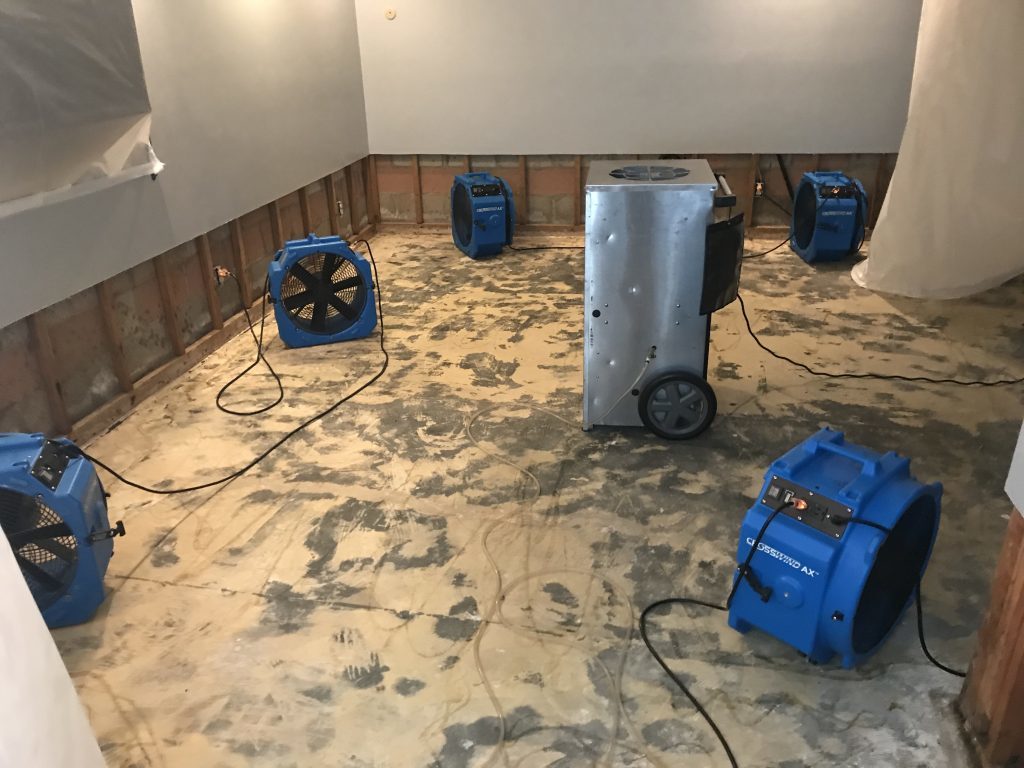
After extraction, professional drying equipment can help remove remaining moisture.
Air movers create airflow across wet materials.
Dehumidifiers remove moisture from the surrounding air.
The combination encourages water inside building materials to evaporate.
Drying may take time depending on how severe the flooding was and what materials became wet.
Technicians can monitor moisture levels during the process and adjust equipment when necessary.
The objective is to confirm that affected materials have actually dried rather than simply waiting until they look normal.
Flooded Carpet Can Hide Water
Carpet can make basement flooding deceptive.
The surface may begin feeling dry while the padding underneath remains soaked.
Water can also reach the subfloor or concrete underneath.
Depending on the source of the flooding and how long the carpet remained wet, parts of the carpet system may need to be removed.
Restoration professionals can inspect the materials and determine whether cleaning and drying are appropriate.
Contaminated flood water may require different handling than clean water from certain plumbing leaks.
Finished Basements Need Special Attention
Finished basements can suffer more extensive damage because there are more building materials present.
Drywall, flooring, insulation, cabinets, built in shelving, furniture, and finished ceilings may all be affected.
Water can become trapped inside these materials.
A finished basement may appear mostly normal after standing water disappears while significant moisture remains behind the walls.
Professional moisture inspection becomes especially valuable in these situations.
Finding wet materials early can prevent more expensive problems later.
Mold Can Follow Basement Flooding
Basements already tend to receive less airflow than many other areas of a home.
Adding flood moisture makes the environment even more favorable for mold growth.
Musty smells after a basement flood should be investigated.
Mold can develop behind drywall, underneath flooring, around trim, or inside other areas where moisture remained.
Fast extraction and drying help reduce this risk.
The important thing is removing the moisture rather than masking odors or simply cleaning the visible surface.
Protect Important Items Before the Next Storm
Once the basement has been restored, homeowners can make changes that reduce future risk.
Important documents and valuables should be stored above floor level.
Plastic storage containers may protect belongings better than cardboard boxes.
Sump pumps should be checked periodically.
Gutters and downspouts should direct water away from the foundation.
Visible foundation cracks should be inspected.
Homeowners who experience repeated flooding should investigate the underlying reason instead of treating every flood as an unrelated event.
Professional Basement Flood Cleanup on Long Island
Basement flooding can feel overwhelming when you first discover it, but the restoration process becomes much more manageable when handled step by step.
Control the source.
Make sure the property is safe.
Remove standing water.
Inspect for hidden moisture.
Dry the structure.
Clean affected areas.
Repair damaged materials.
Newhouse Restoration provides water damage restoration and flood cleanup for homeowners in Bohemia and throughout Long Island.
If your basement has flooded because of heavy rain, a sump pump problem, plumbing damage, or another water emergency, acting quickly can help limit how far the damage spreads.
Contact Newhouse Restoration at (631) 604-8590 for professional basement water removal and flood restoration on Long Island.
