
Water damage rarely gives homeowners much warning. One moment everything inside your home is normal, and the next you may be dealing with a flooded basement, a leaking appliance, water coming through the ceiling, or several rooms affected by a broken pipe.
For homeowners in Bohemia, NY, responding quickly to water damage can make a major difference in how much of the property can be saved.
Water does not remain where you first see it. It can move underneath flooring, behind walls, into insulation, beneath cabinets, and through ceilings. Even after the visible water is gone, moisture can remain trapped inside the structure.
That is why professional water damage restoration is about much more than removing a puddle.
Newhouse Restoration provides water damage restoration in Bohemia and throughout Long Island for homeowners dealing with flooding, leaks, storm damage, plumbing failures, and other water emergencies.
Here is what you should know when water enters your home.
Stop the Source of the Water When Possible
The first step is figuring out where the water is coming from.
If a pipe has broken, shutting off the main water supply may stop additional water from entering the property.
If a washing machine, dishwasher, refrigerator line, toilet, sink, or another appliance is leaking, the individual water supply may be able to be shut off.
Storm flooding can be more difficult to control. Water may be entering through a foundation, basement window, roof, doorway, or another exterior opening.
Do not put yourself in danger trying to stop the water.
If there is a risk involving electricity, contaminated water, or unstable building materials, stay away from the affected area until it is safe.
Once the source has been stopped or controlled, water removal can begin.
Remove Standing Water Quickly
Standing water should not remain inside a property any longer than necessary.
The longer water sits, the more time it has to soak into surrounding materials.
Drywall can absorb moisture.
Wood flooring can absorb moisture.
Carpet padding can hold large amounts of water.
Cabinets and furniture can swell.
Insulation can trap moisture inside walls.
Professional water extraction equipment can remove large volumes of water much faster than household equipment.
This becomes especially important when an entire basement or several rooms are affected.
A few inches of water covering a large area can represent hundreds or thousands of gallons.
Removing that water quickly gives the property a much better chance of drying properly.
Water Can Spread Beyond the Visible Damage
One of the biggest misconceptions about water damage is that the wet area you can see represents the entire problem.
Usually, it does not.
Water can move underneath flooring and spread into nearby rooms.
It can enter walls through the bottom of drywall.
It can travel beneath cabinets or collect underneath appliances.
A leak on an upper floor may also travel through walls and ceilings before becoming visible somewhere else.
This is why moisture detection is an important part of professional water damage restoration.
Restoration technicians can inspect surrounding materials and look for moisture that may not be obvious from the surface.
Without this step, hidden water can remain inside the property after the visible cleanup appears complete.
Flooded Flooring Needs Careful Attention
Flooring is often one of the first materials affected during a flood.
Carpet can absorb water quickly, while the padding underneath may hold even more moisture.
Hardwood flooring can begin absorbing water and changing shape.
Boards may cup, buckle, separate, or swell.
Laminate flooring may expand around seams.
Vinyl flooring may look completely normal while moisture remains trapped underneath it.
Tile can resist water on the surface, but moisture may still reach materials underneath the tile.
The condition of the floor depends on how much water entered, how long it remained wet, and where the water came from.
A professional inspection can help determine whether materials can be dried and restored or whether removal is necessary.
Wet Walls May Look Dry
Drywall is another major concern after flooding.
Water entering a room can soak into the bottom portion of drywall and gradually move upward.
The outside surface may begin drying while the inside remains damp.
Moisture may also reach insulation and wood framing behind the wall.
Homeowners may notice bubbling paint, staining, soft drywall, swelling trim, or a musty smell.
Other times, there may be almost no visible indication.
Moisture meters can help determine how much water remains inside affected materials.
This information allows the restoration process to focus on areas that actually need drying instead of relying on appearance alone.
Professional Drying Protects the Structure
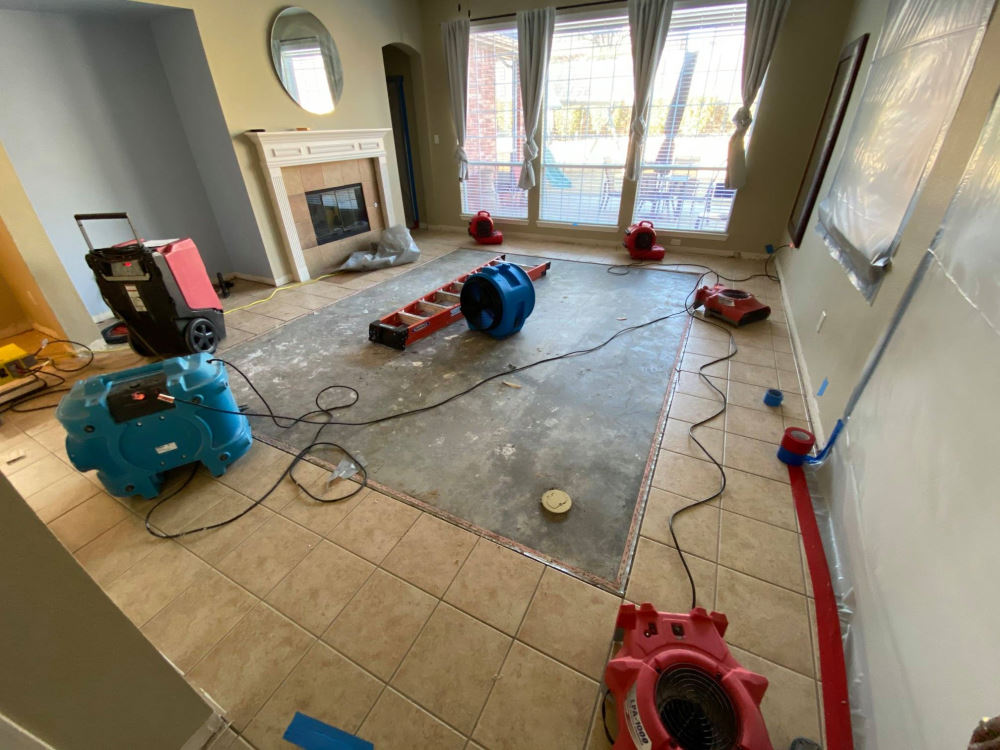
Water extraction removes liquid water, but it does not remove every bit of moisture from building materials.
The next part of the restoration process is structural drying.
Professional air movers help increase airflow across wet materials.
Dehumidifiers remove moisture from the surrounding air.
Together, this equipment creates conditions that encourage moisture trapped inside walls, flooring, framing, and other materials to evaporate.
The equipment may remain in place for several days depending on the amount of water and the materials involved.
Moisture levels can be checked during the drying process to determine how the property is responding.
This is much more reliable than putting a few household fans in a room and assuming everything is dry.
Flood Damage Can Lead to Mold Problems
Mold is one of the biggest concerns homeowners have after water damage.
That concern makes sense because mold needs moisture to grow.
Areas behind walls, underneath flooring, inside cabinets, and around other enclosed spaces may stay wet longer than exposed surfaces.
A musty smell can be one indication that moisture has remained somewhere inside the property.
Visible discoloration or mold growth is another.
The best way to reduce the risk of mold after flooding is to remove the water and dry affected materials as quickly and thoroughly as possible.
Simply spraying cleaner on the surface does not solve a hidden moisture problem.
The source of moisture has to be addressed.
Basement Flooding Is Common After Heavy Rain
Basements are especially vulnerable because they sit below the rest of the property.
Heavy rainfall can saturate the ground surrounding a home.
Water may enter through cracks in the foundation, basement windows, drains, or other openings.
A sump pump that fails or cannot keep up with incoming water can also lead to flooding.
Finished basements can experience significant damage because water may affect flooring, drywall, insulation, furniture, electronics, storage areas, and other materials.
If your Bohemia home experiences basement flooding, removing standing water quickly is one of the most important steps you can take.
Plumbing Failures Can Cause Major Water Damage
Not every flood comes from bad weather.
A broken pipe can release a huge amount of water in a short period of time.
Washing machine supply lines, water heaters, toilets, sinks, refrigerators, dishwashers, and other household systems can also fail unexpectedly.
Some of the most serious water losses happen when homeowners are away.
A small plumbing failure may continue releasing water for hours before anyone notices.
By the time the problem is discovered, water may have spread through several rooms or even multiple floors.
After the source is shut off, professional water extraction and drying can help limit additional damage.
Watch for Warning Signs After the Cleanup
Water damage is not always finished when the floor looks dry.
Homeowners should continue watching for changes around the affected area.
Possible warning signs include:
Musty odors
Warped flooring
Peeling or bubbling paint
Swollen baseboards
Ceiling stains
Cracked drywall
Unusual indoor humidity
Visible mold
Cabinets that begin swelling
Flooring that feels soft or uneven
These changes may indicate that moisture remains somewhere inside the structure.
The sooner hidden water is discovered, the easier it may be to address.
Water Damage Restoration in Bohemia, NY
Water damage can spread quickly, but a proper restoration plan helps bring the situation under control.
The process usually begins with locating and stopping the source when possible.
Standing water can then be extracted.
Affected materials are inspected for hidden moisture.
Drying equipment is positioned throughout the damaged areas.
Moisture levels are monitored until the structure is dry.
Damaged materials can then be cleaned, removed, or restored based on their condition.
Newhouse Restoration provides water damage restoration in Bohemia, NY and surrounding Long Island communities.
Whether your home has experienced a flooded basement, broken pipe, leaking appliance, storm damage, or another water emergency, getting professional help quickly can reduce the amount of time moisture remains inside the property.
Newhouse Restoration is available for water damage and flood restoration throughout the area.
Call (631) 604-8590 for water damage restoration in Bohemia, NY.